In the landscape of modern manufacturing, the race toward Industry 4.0 is no longer a distant vision—it is an hourly reality. As floor managers and IT directors strive to eliminate paper, reduce downtime, and cut operational costs, a quiet hardware revolution has taken place on the shop floor.
Consumer-grade tablets wrapped in plastic cases are being phased out. In their place, enterprise-wide adoption of industrial tablets has skyrocketed.
But why are manufacturing companies increasingly prioritizing procurement budgets for rugged industrial tablets over standard mobile devices? The answer lies not just in their physical durability, but in their unique ability to bridge the gap between heavy enterprise software and the harsh, fast-paced reality of the factory floor.
Here is how modern manufacturing enterprises are leveraging industrial tablets to drive unprecedented productivity in 2026.
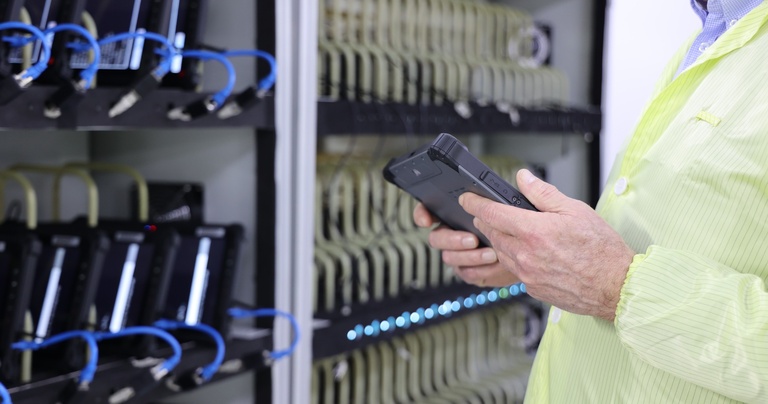
Rugged industrial tablet used for production line inspection and real-time quality control in manufacturing.
The Digital Backbone: Seamless Integration with MES and ERP
For years, the greatest bottleneck in manufacturing intelligence was the “data delay.” Workers would log production data on paper forms, which clerks would manually enter into enterprise systems hours later.
Industrial tablets serve as the immediate, real-time portal to MES (Manufacturing Execution Systems) and ERP (Enterprise Resource Planning) software. Equipped with high-speed Wi-Fi 5/6 and integrated 5G, operators can clock into jobs, log material consumption, and report finished goods directly from their workstation. When the ERP updates material levels or the MES shifts production schedules, operators see it instantly on their tablet screen. This eliminates data lag, prevents administrative errors, and gives management a crystal-clear, real-time view of OEE (Overall Equipment Effectiveness).
Streamlining Shop Floor Operations & Asset Management
Beyond central software integration, rugged tablets have become indispensable across several critical touchpoints on the factory floor:
1. Factory Patrol & Inspection
Routine facility inspections require mobility and precision. Armed with an industrial tablet, safety and operations inspectors can follow dynamic checklists, scan RFID tags on physical infrastructure to prove compliance, and instantly log anomalies. If a leak or safety hazard is spotted, the inspector can snap a high-resolution photo, annotate it directly on the screen, and create an urgent maintenance ticket on the spot.
2. Equipment Maintenance & Repair
When a critical machine goes down, every minute costs thousands of dollars. Maintenance technicians equipped with rugged tablets don’t need to run back to an office to consult binders of schematics. They can pull up 3D CAD files, troubleshooting histories, and technical manuals right at the machine side. Furthermore, in 2026, many enterprises utilize the tablet’s camera for AR (Augmented Reality) remote assistance, allowing an off-site specialist to guide the floor technician through a complex repair in real time.
3. CNC Machine Interaction
In machining environments, industrial tablets serve as flexible human-machine interfaces (HMIs) for CNC equipment. Operators can wirelessly upload or tweak G-code programs, monitor spindle loads, and track cycle times. Because these tablets are built to withstand electromagnetic interference (EMI) and airborne oil mists, they can safely operate in close proximity to heavy machining centers where consumer devices would glitch or fail.
Ensuring Precision: Compliance, Traceability, and Quality
4. End-to-End Production Traceability
Modern supply chains demand flawless traceability, especially in automotive, aerospace, and medical device manufacturing. Industrial tablets feature built-in, dedicated barcode and DPM (Direct Part Marking) scanning engines. Operators can effortlessly scan laser-etched barcodes on raw metal parts, tracking the exact component from incoming inspection, through assembly, and into final packaging. If a defect is found later, the enterprise can trace the exact batch, machine, and hour of production within seconds.
5. Quality Inspection
Quality assurance (QA) inspectors require a device that can keep pace with fast-moving assembly lines. Industrial tablets allow QA personnel to log dimensional measurements, record torque values from Bluetooth-connected smart tools, and pass or fail batches instantly. The rugged build ensures that if a tablet is accidentally dropped onto a concrete floor or splashed with cutting fluid during an inspection, the data remains safe and the process continues without interruption.
6. Digital Work Instructions
Say goodbye to laminated paper binders hanging above workstations, which quickly become outdated and grease-stained. Digital Work Instructions delivered via industrial tablets ensure that operators are always looking at the absolute latest revision of an assembly process. Step-by-step videos, interactive 3D models, and visual alerts for high-risk steps can be displayed clearly, drastically reducing onboarding times for new workers and minimizing assembly errors on high-mix, low-volume production lines.
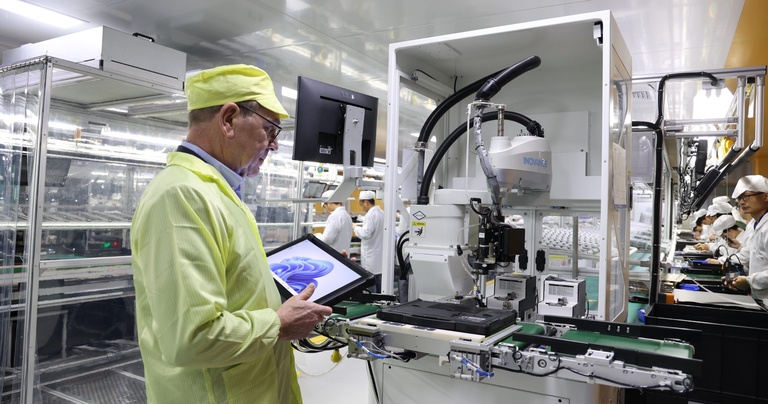
Rugged tablet supporting smart manufacturing, industrial automation and factory operations.
Navigating the Selection: OS and Form Factors
When preparing your enterprise procurement strategy, there is no “one-size-fits-all” hardware. The ideal industrial tablet depends entirely on your existing software architecture and the specific physical movements of your workforce.
Choosing the Right Ecosystem: Windows vs. Android
- Windows Industrial Tablets: If your factory relies heavily on legacy desktop software, complex CNC interfaces, or full-scale ERP clients that require robust processing power and active directory security, Windows 11 IoT Enterprise is the gold standard. It allows your IT department to manage the tablets just like corporate PCs while offering seamless integration with local industrial networks.
- Android Industrial Tablets: If your MES/WMS platforms are built on modern, lightweight web applications or specialized mobile apps, Android Enterprise offers incredible agility. Android devices typically feature rapid boot times, excellent battery optimization, and a highly intuitive interface that front-line workers can master with zero training.
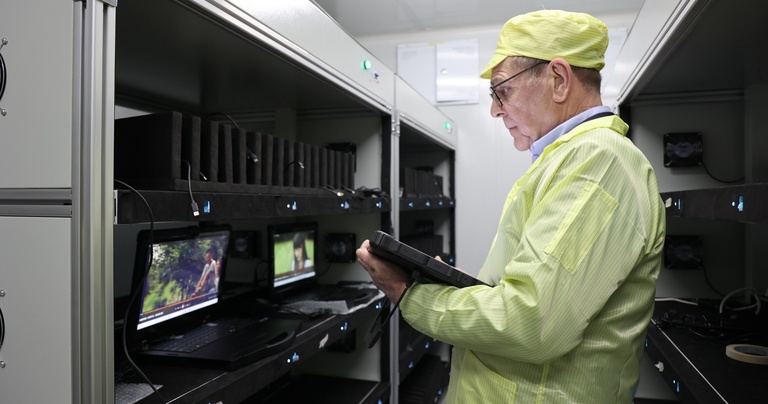
Rugged tablet improves factory equipment inspection, preventive maintenance and manufacturing efficiency.
Sizing for the Scenario: From Portability to Maximum Visibility
- 8-Inch Tablets (The Ultra-Mobile Worker): Ideal for maintenance technicians, warehouse pickers, and supervisors who are constantly on the move. An 8-inch rugged tablet fits comfortably in a heavy-duty holster or can be held in one hand for hours without fatigue, making it perfect for factory patrols.
- 10-Inch Tablets (The Sweet Spot for Versatility): The most popular form factor for manufacturing. A 10-inch screen offers the perfect balance—large enough to display dense ERP data grids, digital work instructions, and detailed blueprints clearly, yet portable enough to be carried across the floor or mounted to a forklift.
- 12-Inch & Larger Tablets (The Stationary Station): Designed for complex QA stations, CNC programming environments, or forklift terminals where large schematics and split-screen multitasking are required. These are typically vehicle-mounted or docked at fixed workstations where visibility is the top priority.
Conclusion:
Investing in industrial tablets is no longer just about buying “tough hardware”—it is a strategic decision to empower your workforce, eliminate operational blind spots, and maximize factory-floor throughput. By putting real-time data directly into the hands of your operators, your enterprise secures a resilient, future-proof edge in the competitive manufacturing landscape of 2026.