Many companies initially deploy consumer tablets because they are easy to purchase and familiar to workers.
At the beginning, a standard tablet may seem enough for inventory tracking, navigation, or basic operational tasks.
However, warehouse floors, production lines, construction sites, and field environments often expose their limitations quickly.
Drops onto concrete, forklift vibration, dust, moisture, and long operating shifts can gradually affect device reliability and interrupt workflows.
To solve these challenges, companies across logistics, manufacturing, and industrial operations increasingly adopt dedicated industrial mobility hardware.
This guide explains what an industrial tablet is, where it is used, and how to choose the right solution in 2026.
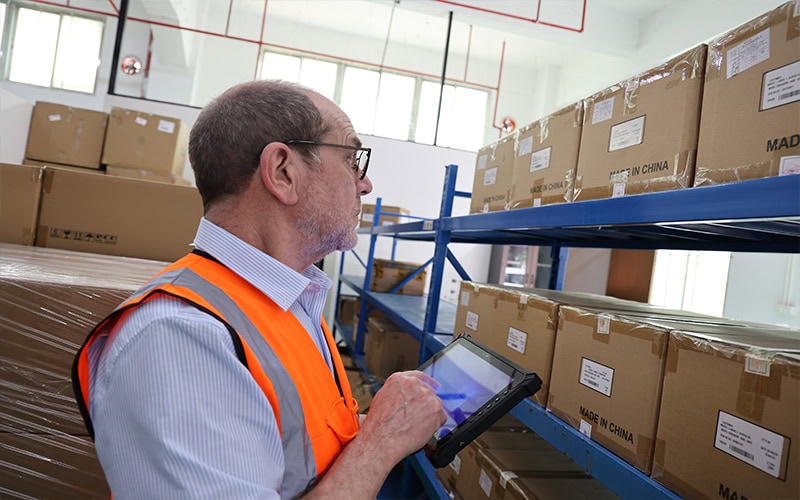
Why Industrial Workspaces Reject Consumer Tech
Repeated device failures, unstable charging, and environmental damage gradually increase maintenance costs and interrupt industrial workflows.
For operations running multiple shifts, hardware reliability often becomes more important than hardware specifications.
What Is an Industrial Tablet?
An industrial tablet is a reinforced mobile computer designed to operate reliably in harsh industrial environments.
Unlike consumer tablets built for offices or daily use, an industrial tablet PC is engineered for environments involving vibration, dust, moisture, outdoor work, and continuous operation.
Industrial tablets often include:
- Reinforced internal structures
- Impact-resistant housings
- Industrial I/O interfaces
- Vehicle dock support
- Integrated barcode scanning
- High-brightness displays
These devices function as operational hubs connecting front-line activities directly with systems such as:
- Warehouse Management Systems (WMS)
- Enterprise Resource Planning (ERP)
- Manufacturing Execution Systems (MES)
- Fleet management platforms
Industrial Tablet vs Consumer Tablet: What’s the Difference
Although industrial tablets and rugged tablets are often used interchangeably, they usually focus on different deployment scenarios.
| Feature | Industrial Tablet Computer | Consumer Tablet |
| Primary Focus | Fixed integration & automation | Entertainment, Home, Office |
| Structure | Reinforced internal chassis | Fragile shell |
| Peripherals | Barcode, RS232, RJ45 | USB |
| Mounting | Vehicle dock integration | Portable use |
| Lifecycle | Long enterprise support | 1 Year |
Industrial tablets are commonly selected for manufacturing systems, warehouse terminals, automation environments, and vehicle deployments.
Rugged tablets are frequently used for inspections, utilities, outdoor work, and field mobility.
Where Are Industrial Tablets Used?
Industrial mobility solutions help digitize workflows, reduce manual errors, and improve operational visibility.
Warehouse and Fulfillment
An industrial tablet for warehouse operations often serves as a primary terminal.
Mounted on forklifts or carried by warehouse operators, these devices support inventory tracking, order picking, and put-away workflows.
An industrial tablet with barcode scanner allows workers to scan labels and pallets without separate handheld devices.
Manufacturing and Production Lines
An industrial tablet for manufacturing connects operators directly with factory systems.
Fixed industrial tablets display work instructions, machine data, production metrics, and quality records.
Industrial protection helps devices withstand dust, oil mist, and daily industrial exposure.
Logistics and Fleet Management
A truck-mounted industrial tablet supports dispatch operations, navigation, fleet tracking, and ELD workflows.
When integrated with vehicle docks, these systems remain stable under long-term vibration and transportation environments.
Key Features to Look for in an Industrial Tablet
When reviewing industrial hardware, focus on operational durability rather than consumer specifications.
IP65 Protection
Industrial environments expose hardware to dust, moisture, and outdoor conditions.
An IP65 industrial tablet provides protection against dust ingress and water exposure.
Higher ratings such as IP67 may be selected for harsher environments.
MIL-STD-810H Durability
Industrial devices often experience drops, vibration, and continuous movement.
MIL-STD-810H testing helps verify durability for warehouse, transportation, and field environments.
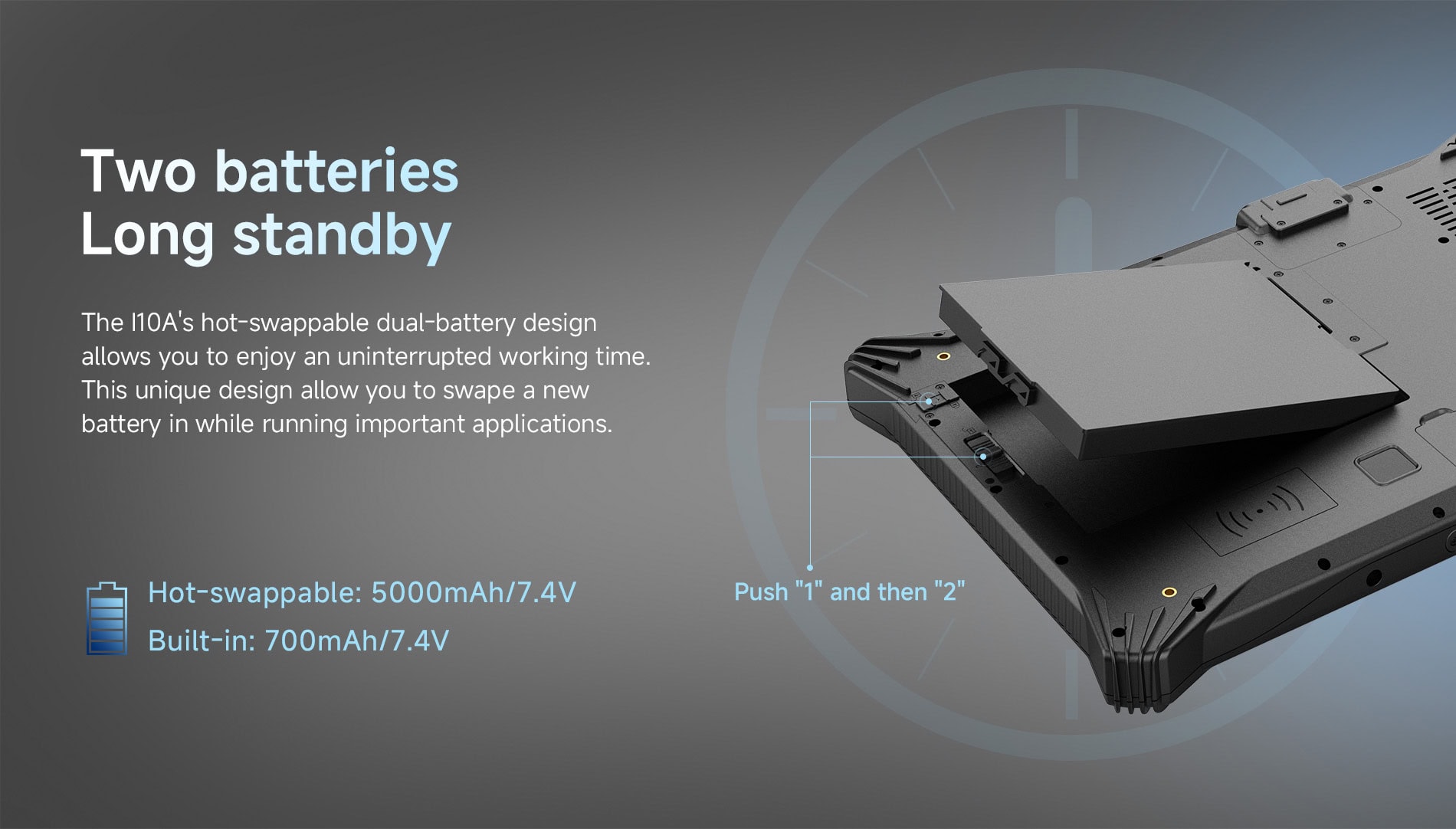
Hot-Swappable Battery
Industrial operations frequently run multiple shifts.
Hot-swappable batteries allow power replacement without shutting down applications.
Integrated Barcode Scanning
High-volume environments benefit from dedicated scan engines.
An industrial tablet with scanner improves speed and reading accuracy compared with standard cameras.
Heavy-Duty Vehicle Docks
Vehicle docks do more than hold devices.
Professional docking systems often include:
- Stable charging
- Locking support
- Peripheral interfaces
- Vehicle power integration
Sunlight-Readable Displays
Outdoor teams often struggle with visibility.
Displays around 1000 nits improve readability under direct sunlight.
Windows vs Android Industrial Tablet
Selecting the right operating system depends on workflow requirements.
Industrial Windows Tablet
Industrial Windows tablets are widely used in manufacturing and enterprise environments.
Windows platforms support desktop software, factory systems, ERP, MES, and legacy applications.
Industrial Android Tablet
Industrial Android tablets provide lightweight deployment and excellent battery efficiency.
Android is commonly used in warehouse management, logistics applications, and operational workflows.
Its familiar interface can also reduce training requirements.
Industrial Tablet Sourcing and Procurement Guide
For procurement teams, hardware selection is only one part of deployment.
Consider these factors:
System Integration
Verify compatibility with WMS, ERP, MES, and fleet systems.
Mounting and Accessories
Evaluate docks, forklift mounts, vehicle brackets, and charging systems together with the tablet.
Lifecycle Support
Long-term support is important for enterprise deployments.
Working with an experienced industrial tablet manufacturer helps improve maintenance planning and deployment stability.
Recommended Industrial Tablet Solutions
Selecting a tablet is only one part of industrial deployment.
Many operations evaluate tablets together with docks, barcode modules, mounting systems, and long-term support services.
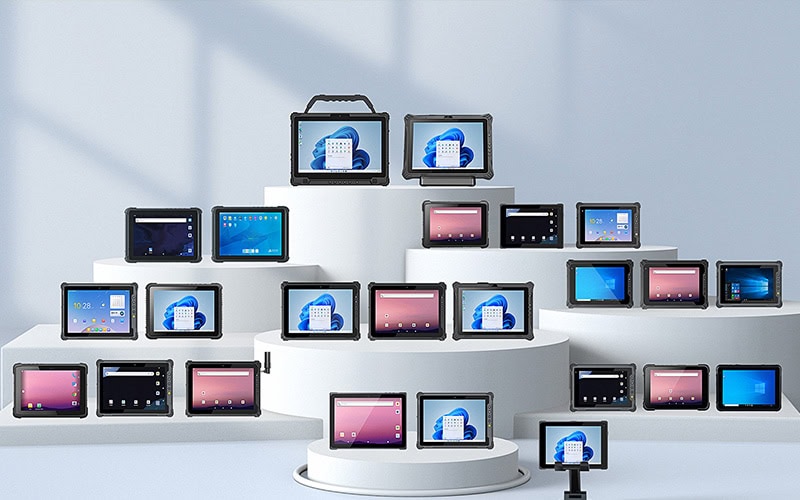
A comprehensive hardware ecosystem of Android and Windows rugged tablets from a professional industrial tablet manufacturer.
As an experienced industrial tablet manufacturer providing industrial mobility solutions, we develop Android and Windows platforms for warehouse, logistics, manufacturing, and transportation environments.
Our devices combine:
- MIL-STD-810H durability
- IP65 protection
- Integrated GPS
- Barcode scanning
- Vehicle dock compatibility
- High-brightness displays
This ecosystem approach helps standardize hardware across operations while reducing maintenance complexity.
Typical deployment scenarios include warehouse management, manufacturing operations, fleet transportation, cross-docking workflows, and utility field service.
By integrating tailored OEM/ODM hardware customization directly with your existing infrastructure, our team helps ensure your multi-site deployment scales efficiently from day one.
Frequently Asked Questions (FAQ)
What is an industrial tablet?
An industrial tablet is a reinforced mobile computer designed for vibration, drops, dust, moisture, and industrial environments.
What is the difference between an industrial tablet and a rugged tablet?
Industrial tablets focus on integration and enterprise workflows, while rugged tablets often emphasize mobility and field use.
Where are industrial tablets used?
They are commonly deployed in warehouses, manufacturing, logistics, utilities, and construction environments.
Are industrial tablets waterproof?
Most industrial tablets provide IP65 protection, with higher ratings available for demanding environments.
What IP rating should an industrial tablet have?
IP65 is generally recommended for environments involving dust and moisture.
What operating system is best for industrial tablets?
Windows is often preferred for enterprise integration, while Android is widely used for warehouse and logistics applications.
Are industrial tablets suitable for warehouse operations?
Yes.
Industrial tablets support inventory tracking, barcode scanning, and forklift workflows.
Can industrial tablets support barcode scanning?
Yes.
Many industrial tablets integrate dedicated 1D / 2D barcode engines.
Can industrial tablets support vehicle mounting?
Yes.
Many industrial tablets support vehicle docks and forklift mounting systems for logistics and transportation environments.
Conclusion
Selecting the right industrial tablet requires balancing durability with operational requirements.
Protection ratings, battery systems, mounting methods, and deployment environments should be evaluated together.
As digital workflows continue expanding across logistics, manufacturing, and field operations, industrial mobility hardware remains an effective approach for reducing downtime and improving productivity.