With the rise of smart retail and modern restaurant operations, tablets are no longer limited to displaying digital menus or taking orders at the front counter.
Today, they power mobile POS systems, real-time front-of-store inventory checks, multi-platform delivery order management, cold-chain kitchen coordination, and instant inventory transfers between locations.Tablets have become the digital command center that keeps modern stores and restaurants running efficiently.
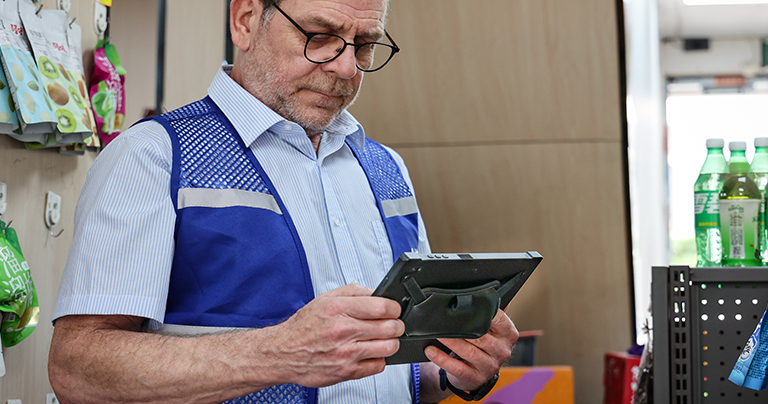
During peak dining hours, restaurant staff often need to carry tablets while moving through narrow aisles, crowded tables, and busy service areas.At the same time, retail employees may need to scan hundreds or even thousands of products during promotions, inventory counts, and restocking operations.In these high-frequency workflows, standard consumer tablets can quickly become the weakest link.As a result, more retailers are adopting rugged tablets with integrated barcode scanning capabilities for daily store operations and inventory management.
Key Features for Retail & Restaurant Tablets
1. Full-Power Operation During Short Breaks: Pogo Pin Docking & Hot-Swappable Batteries
At checkout counters and high-frequency inventory stations, employees hate one thing most: searching for charging cables.
Consumer USB Type-C ports are easily damaged by repeated plugging, cable pulling, and moisture exposure.
Retail Standard: Professional retail tablets should support Pogo Pin magnetic docking systems.
Restaurant staff can simply place the tablet onto the dock after taking orders and charging begins instantly—no cables, no wear, no interruptions.
For 24/7 convenience stores and multi-shift inventory operations, devices should ideally support hot-swappable batteries, allowing battery replacement without shutting down the system.
This keeps store operations running continuously.
2. Say No to “Fake Scanning”: Native 45° Integrated Barcode Window
Many generic solutions suggest external Bluetooth scanners or using tablet cameras for barcode scanning.
In real stores, camera scanning often struggles with focus delays, reflective packaging, or oil-stained labels.
External scanners create another device that needs charging and management.
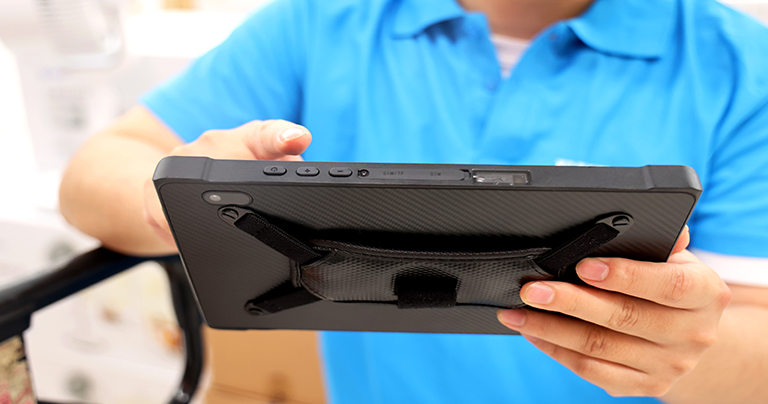
Practical Requirement: Retail tablets should integrate native 2D barcode scanning hardware.
A better design places the scanner window at a 45-degree angle.
This allows employees to scan products on lower shelves or customer payment codes naturally without twisting their wrists.
Staff can keep the tablet in a comfortable position while viewing both the screen and products simultaneously—reducing fatigue during long inventory shifts.
3. Waterproof, Oil Resistant & Built for Real Store Environments
Restaurant kitchens and dining areas are filled with water, sauces, oil, and cleaning chemicals.
Staff may move directly from cleaning tables to confirming orders on the screen.
A qualified retail tablet should provide IP65 or higher protection.
The device should survive spills and support wet-touch operation.
Displays should also include anti-fingerprint and oil-resistant coatings, allowing staff to wipe the screen clean quickly without experiencing touch drift or accidental inputs.
4. Cold Chain Ready: Anti-Fog Displays for Temperature Changes
Modern supermarkets often include bakery areas, ambient zones, and frozen storage sections operating down to –20°C (–4°F).
When employees move tablets from cold storage into warmer retail areas, consumer devices often experience condensation and lens fogging, making screens difficult to read and barcode scanners unusable.
Professional rugged tablets should include anti-fog protection and wider industrial operating temperature ranges.
Only then can they maintain stable operation across cold-chain retail environments.
Android vs Windows Tablets for Retail Inventory
| Feature | Rugged Android Tablet | Rugged Windows Tablet |
| Mobile POS Apps | Excellent | Good |
| Inventory Apps | Excellent | Good |
| Battery Life | Usually longer | Moderate |
| Legacy Software | Limited | Strong |
| Deployment Cost | Lower | Higher |
| Best For | Store staff, inventory teams | ERP-heavy retail workflows |
Recommendation
Android Is the Preferred Choice for Most Smart Retail Deployments
90% of smart retail businesses and restaurant operations, Android is the preferred platform.
Today’s ecosystems—including restaurant ordering systems, food delivery platforms, mobile payments, and cloud-based retail applications—are overwhelmingly built around Android.
Typical examples include:
- Restaurant ordering workflows
- Food delivery order aggregation
- Mobile payment systems
- SaaS-based inventory and retail applications
Android offers:
- Lower power consumption
- User-friendly interfaces for frontline staff
- Faster deployment
- Lower overall hardware and software costs
For the majority of smart retail scenarios, Android provides the best balance between performance and cost.
Windows for Legacy Retail Environments
Windows becomes relevant mainly for large, established retail chains still operating legacy systems.
Typical scenarios include:
- Traditional ERP desktop clients deployed years ago
- Complex Excel-based reporting workflows
- Legacy financial or tax-control hardware integrations
- Software that only runs on x86 environments
If critical business systems do not have mobile applications and still rely on desktop software, Windows industrial tablets may be the better option.
Conclusion
In the fiercely competitive retail market, the pursuit of “lightweight, aesthetically pleasing, and ultra-narrow bezels” in consumer tablets often proves to be their most fatal weakness. For a pragmatic retail owner or factory manager, the real heroes who can withstand a drop on an oily table, remain fog-free after being stored in cold storage, and don’t require constant plugging and unplugging of charging cables are the ones who can help maintain store profit margins.